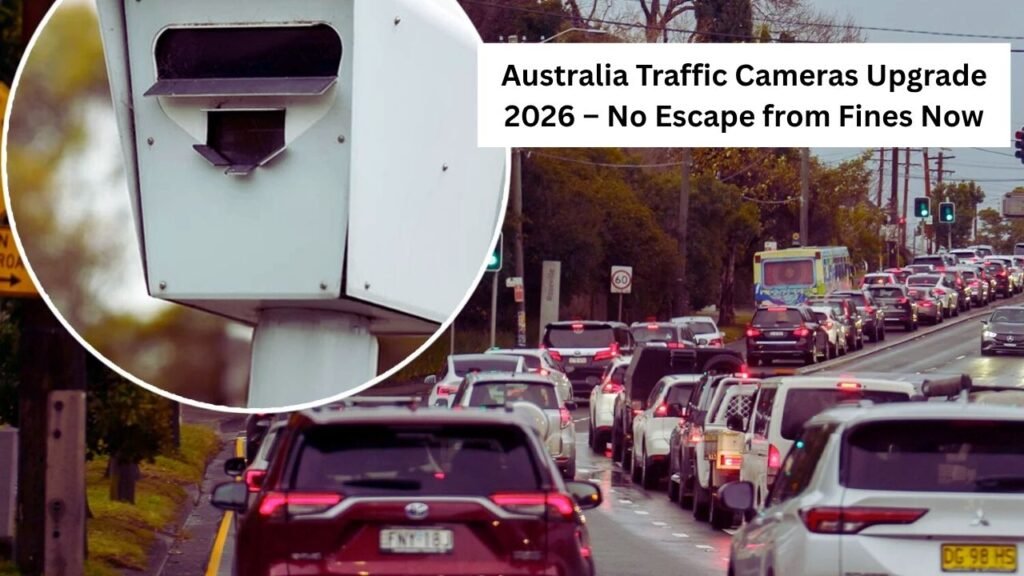
Starting this month, Australian motorists are facing the most significant overhaul of road enforcement technology in a decade. The 2026 “Smart Camera” rollout has officially moved from testing phases into full statewide operation across several jurisdictions, meaning the days of spotting a camera and quickly slowing down are effectively over. With new AI-driven capabilities and “bi-directional” tracking, the window for avoiding a fine has shrunk to zero.
The Rise of AI and Bi-Directional Detection
The biggest shift in 2026 is the deployment of bi-directional mobile phone and seatbelt cameras. Previously, most mobile detection units could only monitor two lanes of traffic heading in one direction. However, following a world-first upgrade in New South Wales and Western Australia, a single portable trailer can now scan up to six lanes of traffic simultaneously, regardless of which way the vehicles are traveling.
These units utilize high-definition sensors and AI software to peer through windshields—even at night or in heavy rain—to detect infractions.
- The AI identifies if a driver’s hands are not on the wheel or if a device is being held in a lap.
- It also flags whether a seatbelt is being worn correctly (resting low on the hips and across the shoulder) rather than tucked under an arm.
Point-to-Point Cameras Move to Suburbia
While average speed cameras (point-to-point) were once reserved for heavy trucks on major highways, 2026 marks their expansion into residential and urban corridors. These systems calculate your average speed between two points, making it impossible to “brake-check” a camera to avoid a ticket.
In Victoria, the government has added over 2,200 approved mobile speed camera locations this year alone. Many of these sites are now being serviced by new trailer-based “enforcement trailers” that can be left unmanned for days.
- These trailers are armored and GPS-tracked, allowing them to be placed in high-risk zones where police vehicles couldn’t safely park before.
- They are often unmarked, meaning drivers won’t know they’ve been caught until the infringement notice arrives in the mail or via the state’s digital app.
The Financial Sting: Fines Exceeding $1,000
The technology isn’t just getting smarter; the penalties are getting steeper. In several states, high-risk offenses detected by these new cameras can now trigger fines that surpass the $1,000 mark. For example, using a handheld mobile phone while driving in certain jurisdictions now carries a four-figure penalty and significant demerit points.
Combined with “multi-offense” detection—where a single camera flash can catch you for speeding, phone use, and an unrestrained passenger all at once—a single drive could result in an immediate loss of license.
The 2026 traffic camera upgrades represent a zero-tolerance shift in Australian road safety. By integrating AI that never sleeps and bi-directional hardware that covers entire motorways, authorities have effectively closed the loopholes that once allowed “lucky” drivers to escape notice. While the government maintains these measures are about saving lives and reducing the road toll, the reality for motorists is clear: in 2026, if you break the rules, the technology will find you.