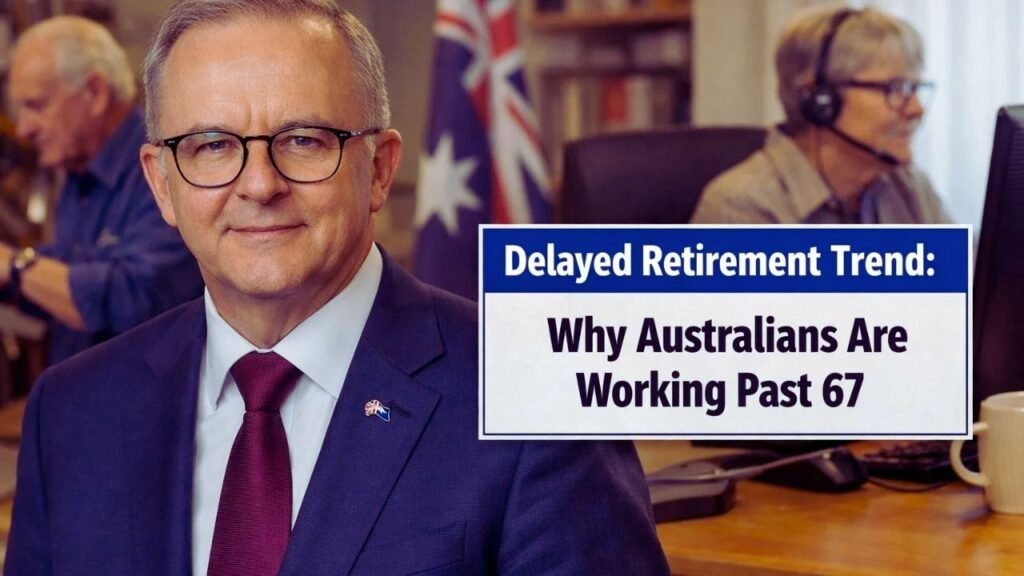
For years, the magic number for Australian retirement has been 67. Since the final step of the age increase was completed in July 2023, most workers have planned their lives around this milestone. However, as we move through 2026, a “hidden truth” is emerging: while the official age isn’t legally moving to 68 or 70 just yet, the government’s shift toward tighter means-testing and the end of the deeming rate freeze is fundamentally changing what “retirement at 67” actually looks like.
The 67 Myth: Why the Age is Only Half the Story
While the official Age Pension age remains 67 in 2026, many Australians are finding that reaching the age doesn’t automatically mean they can afford to stop working. The “hidden truth” lies in the interplay between the pension age and your private savings.
- The government has confirmed there are no legislated plans to lift the age beyond 67 in 2026.
- However, the focus has shifted toward “Retirement Income Sustainability,” meaning the hurdles to get a full payment are getting higher even if the age stays the same.
The Deeming Rate Shift of 2026
The most significant “hidden” change this year is the expiration of the long-term freeze on deeming rates. For years, the government kept these rates low to protect seniors during economic volatility. As of March 2026, those rates have officially been adjusted upward.
- The lower deeming rate is now 1.25%, and the upper rate has hit 3.25%.
- For many, this means Centrelink “assumes” you are earning more from your investments, which can lower your pension payment even if your actual bank interest hasn’t gone up.
The 10-Year Residency “Trap”
Another “hidden” rule catching 2026 retirees off guard is the strict residency requirement. You cannot simply turn 67 and claim the pension if you haven’t spent enough time in the country. To unlock the new maximum rate of $1,200.90 (for singles), you must have been an Australian resident for at least 10 years.
Crucially, at least five of those years must be continuous. This rule is impacting a growing number of Australians who spent a portion of their careers overseas and are now finding their “retirement at 67” delayed not by age, but by the calendar.
The “hidden truth” about 2026 is that while the headline age of 67 remains stable, the financial path to getting there has become more complex. Between the rise in deeming rates and the strict 10-year residency block, “retiring” is no longer a simple matter of hitting a birthday. It is now a strategic calculation of assets, residency, and income. If you are turning 67 this year, the age hasn’t changed—but the rules of the game certainly have.
FAQs
Is the retirement age actually going up to 70 in 2026?
No. Despite persistent online rumors, the official Age Pension age is 67, and there is no current legislation to increase it further in 2026.
What is the “hidden” change everyone is talking about?
The most significant change is the end of the deeming rate freeze, which allows Centrelink to assume you earn more from your assets, potentially reducing your fortnightly pension.
Can I still access my Super at 60?
Yes. The “preservation age” for superannuation remains 60 for most Australians, allowing a “gap” period between stopping work and qualifying for the Age Pension at 67.
What is the maximum I can get in March 2026?
Following the latest indexation, the maximum fortnightly rate for a single person is $1,200.90, including supplements.
Last updated: 18 Mar 2026 (UK Time)